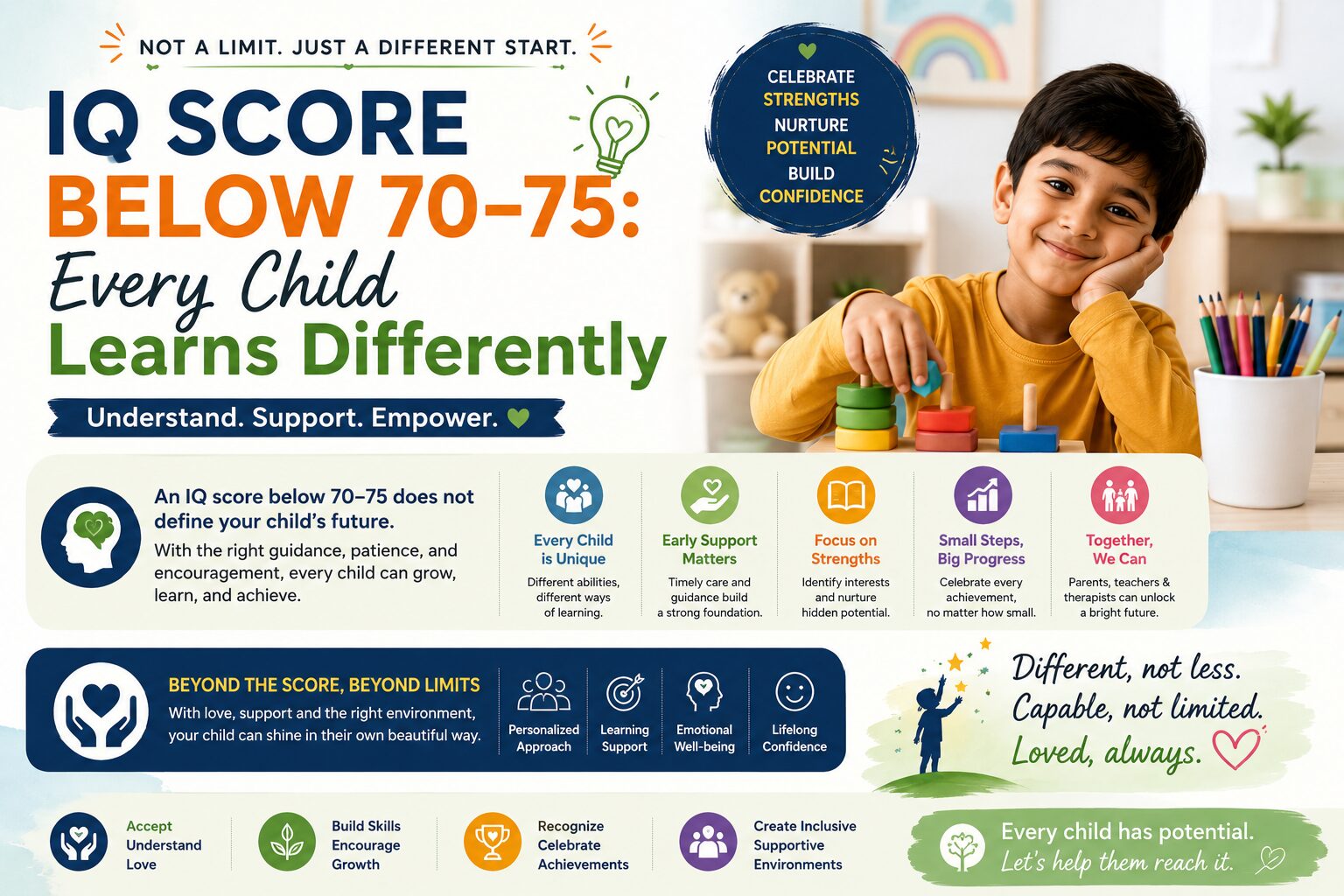
Every Child Has a Different Way of Learning
When Rohan entered Class 5, his parents noticed that something wasn’t quite right. He worked twice as hard as his classmates, yet struggled to complete homework, remember lessons, and perform well in examinations. Every parent-teacher meeting ended with the same advice: “He needs to study harder.”
At home, his parents tried everything. Tuition classes, extra homework, stricter study schedules — nothing seemed to help. Slowly, Rohan began losing confidence. He stopped answering questions in class because he was afraid of making mistakes. Like many children facing learning challenges, he wasn’t lazy; he simply learned differently.
A professional psychological assessment changed everything. Instead of focusing only on marks, specialists looked at how Rohan learned, communicated, solved problems, and managed daily activities. The assessment helped his family understand his strengths, identify the support he needed, and choose an educational pathway that suited his learning style.
Thousands of families across India experience similar situations every year. Hearing that a child has an IQ score below 70–75 can be emotionally overwhelming. Parents naturally worry about education, independence, careers, and the future.
The reassuring truth is that an IQ score does not define a child’s potential. Every child has unique abilities, interests, and strengths. With the right educational support, professional guidance, therapy where appropriate, and a caring family environment, many children continue learning, build confidence, and achieve meaningful milestones.
What Does an IQ Score Below 70–75 Mean?
IQ (Intelligence Quotient) is a standardized measure used by qualified psychologists to understand certain aspects of cognitive functioning such as reasoning, memory, problem-solving, and learning. However, IQ is only one part of a comprehensive assessment.
A child should never be labelled based solely on an IQ score. Professionals also consider adaptive behaviour, communication, social skills, developmental history, daily living abilities, and educational performance before making recommendations.
Two children may have similar IQ scores but very different strengths. One may be an excellent artist, another may enjoy computers, while another may excel in music or practical activities. Understanding these strengths is just as important as identifying areas where additional support is needed.
Parents should remember that the purpose of an assessment is not to limit a child’s future, but to understand how they learn best and what support can help them succeed.
IQ Is More Than Just a Number
Many parents believe that an IQ score predicts everything about their child’s future. This is one of the biggest misconceptions.
Modern assessments focus on the whole child. Psychologists evaluate intellectual functioning, adaptive behaviour, communication skills, emotional development, social interaction, academic abilities, independent living skills, and behaviour at home and school.
A child may struggle academically but demonstrate exceptional creativity, kindness, mechanical skills, artistic talent, or problem-solving abilities in everyday situations.
Instead of asking, “How intelligent is my child?”, a better question is: “How does my child learn best?” This shift in thinking helps parents focus on strengths rather than limitations.
Signs Parents May Notice
Every child develops differently. However, persistent learning difficulties may indicate the need for a professional assessment. Some common signs include difficulty understanding classroom lessons, taking longer than peers to complete schoolwork, forgetting recently learned information, and difficulty following instructions.
Other signs include delayed speech or language development, challenges with reading, writing, or mathematics, limited attention span, difficulty communicating thoughts clearly, low confidence because of repeated academic struggles, and difficulty solving everyday problems independently.
These signs do not automatically indicate an intellectual disability. Similar difficulties may occur because of learning disabilities, ADHD, hearing or vision concerns, emotional challenges, or other developmental conditions. A qualified psychologist or developmental specialist can help identify the underlying cause.
Why Early Identification Matters
Early identification allows children to receive support before academic challenges become overwhelming. Research has shown that timely intervention can improve communication, learning, confidence, social interaction, and daily living skills.
Depending on the child’s needs, professionals may recommend speech and language therapy, occupational therapy, behaviour therapy, special education, Individualized Education Plans (IEPs), parent counselling, and classroom accommodations.
Parents also play an important role. Children benefit when families celebrate small achievements, encourage effort, maintain consistent routines, and create a positive learning environment at home.
Educational Options in India
Choosing the right educational pathway is an important decision for every family. India offers several recognised education boards, each designed to meet different learning needs.
CBSE — The Central Board of Secondary Education follows a structured curriculum and is often chosen by students preparing for national competitive examinations. It is suitable for many learners who thrive in a structured academic environment.
State Board — State Boards provide region-specific curricula and may be suitable for students who wish to continue higher education within their state or study in their regional language.
ICSE — ICSE offers a broad curriculum with a strong emphasis on English language skills, analytical thinking, and project-based learning.
IGCSE — IGCSE provides an internationally recognised curriculum with flexible subject choices and inquiry-based learning.
NIOS — The National Institute of Open Schooling (NIOS) is a nationally recognised board under the Ministry of Education, Government of India. It provides flexible learning opportunities for students whose educational needs may differ from traditional classroom settings. Learn more about the NIOS board in Bangalore and how it works.
For some students — including slow learners, students with medical conditions, sportspersons, artists, or those requiring a flexible academic schedule — NIOS for slow learners may be an appropriate educational pathway after professional assessment.
The most important point is that no education board is universally best. The right choice depends on the child’s abilities, learning style, support needs, and future goals.
Why Some Parents Choose NIOS for Their Child
Every child deserves an educational environment where they feel understood, respected, and encouraged to learn. While many students thrive in traditional schools, others may benefit from a more flexible learning pathway.
For some children with learning difficulties, mild intellectual disabilities, developmental delays, health conditions, sports commitments, or other individual circumstances, NIOS can provide an alternative educational pathway that focuses on flexibility and individual progress.
Unlike traditional schooling, NIOS allows students to learn at a pace that suits their abilities. This flexibility often reduces unnecessary academic pressure and gives families more time to focus on building confidence and essential life skills.
It is important to remember that NIOS is not only for students who have failed in school. Students from many different backgrounds choose NIOS, including sportspersons, artists, students with medical conditions, working professionals, and learners who require a different educational approach.
How NIOS Supports Different Learners
One of the strengths of NIOS is its flexible structure. Depending on the student’s admission stream and current NIOS regulations, students may benefit from flexible examination opportunities, Tutor Marked Assignments (TMAs) that contribute to the final assessment, practical subjects for students who learn better through hands-on activities, and subject combinations selected according to interests and abilities.
Students also have opportunities to improve performance by reappearing in subjects according to NIOS rules, and eligible learners can explore On-Demand Examinations where applicable under current NIOS policies.
Instead of expecting every child to learn in the same way, NIOS recognises that students have different learning styles and educational needs.
Why Parents Choose SchoolBase – NIOS Learning Centre
Choosing the right learning centre is just as important as choosing the right education board. At SchoolBase – NIOS Learning Centre, we understand that every child’s journey is unique. Many of our students come to us after struggling in mainstream schools because of learning difficulties, repeated failures, anxiety, or the pressure of constant comparison with classmates.
Our focus is not only on helping students prepare for NIOS Class 10 admission and NIOS Class 12 examinations but also on rebuilding their confidence and making learning a positive experience again.
Individual Learning Support
Every student learns differently. Our teachers provide personalised academic guidance, smaller learning groups, individual attention whenever required, regular parent counselling, progress monitoring, and study plans based on the student’s learning pace. Rather than comparing students with one another, we encourage each learner to focus on personal improvement.
Learning Without Fear
Many children lose confidence after repeated academic struggles or negative experiences in school. At SchoolBase, we aim to create a supportive environment where students feel comfortable asking questions, making mistakes, and learning without unnecessary pressure.
While no school can guarantee that bullying or comparison will never occur, smaller learning groups and personalised attention can help many students feel more supported than they did in larger classrooms. Our goal is to replace fear with confidence and encouragement.
Guidance from Special Educators
Some children benefit from additional educational support beyond classroom teaching. SchoolBase guides parents in connecting with qualified professionals when appropriate and provides learning support designed to complement recommendations from psychologists, therapists, and special educators. This collaborative approach helps families make informed educational decisions based on the child’s individual strengths and needs.
Learning Assessment Guidance
Parents often wonder why their child is struggling, whether additional support is needed, and which educational pathway is suitable. Our team helps parents understand the assessment process and guides them toward appropriate professional evaluations where needed.
These assessments help identify learning strengths, areas requiring support, educational planning, suitable teaching methods, and future academic pathways. Understanding a child’s learning profile is the first step toward providing meaningful support.
Guidance for UDID Card Applications
For students who may be eligible under Government of India guidelines, SchoolBase provides guidance regarding the Unique Disability ID (UDID) Card application process. A UDID Card can help eligible students access certain educational accommodations and government services, subject to applicable rules and certification by authorised medical professionals. Our team assists parents in understanding the required documentation and application process.
Scribe and Examination Support
Some students with certified disabilities may qualify for examination accommodations, including the use of a scribe (writer), in accordance with current NIOS regulations. SchoolBase helps parents understand eligibility requirements, required documentation, application procedures, and examination support guidelines. Approval of such accommodations is governed by NIOS policies and relevant regulations.
Subject Selection Guidance
Choosing the right subjects can make a significant difference in a student’s confidence and performance. Rather than selecting subjects based only on popularity, we help families consider the student’s interests, learning strengths, career aspirations, practical abilities, and future educational opportunities. Where appropriate, students may choose practical-oriented subjects available under NIOS regulations that better match their learning profile.
Tutor Marked Assignments (TMAs)
Tutor Marked Assignments form an important part of the NIOS assessment process. At SchoolBase, we guide students in understanding TMA requirements, completing assignments correctly, meeting submission deadlines, and improving presentation and accuracy. Consistent work on TMAs helps students stay engaged throughout the academic year.
Online and Offline Learning
Every family has different requirements. SchoolBase offers classroom learning, online classes, hybrid learning support, recorded guidance where available, and regular revision sessions. This flexibility allows students to continue learning even when travel, health, or personal commitments make regular attendance difficult. Review our study materials for more details on how our learning support works.
Support for Sports Students
Young athletes often struggle to balance training, competitions, and academics. SchoolBase provides guidance for sports students who require flexible learning schedules while continuing their education through NIOS. This allows students to pursue both academic and sporting goals without unnecessary stress.
Presidency Public School – Study Centre
SchoolBase works with Presidency Public School, an authorised NIOS Study Centre (Code: 080345). For students allotted to this centre under NIOS procedures, classes, practical guidance, and examinations can be coordinated through the same study centre, making the educational process more convenient and familiar. Parents should note that examination centre allocation is governed by NIOS regulations.
Education Is About More Than Marks
One examination score should never define a child’s future. Many successful adults were once children who struggled in traditional classrooms but flourished after finding an educational environment that matched their learning style.
When schools, parents, therapists, and students work together, children often develop confidence, independence, communication skills, and practical abilities that prepare them for future education, employment, and everyday life.
The right educational pathway is not about finding the easiest option — it is about finding the most suitable option for each individual child. Check our fee structure or contact us to discuss the best pathway for your child.
Frequently Asked Questions (FAQs)
1. What does an IQ score below 70–75 mean?
An IQ score below 70–75 may indicate that a child needs additional learning and developmental support. However, IQ is only one part of a comprehensive assessment. Qualified psychologists also evaluate adaptive behaviour, communication skills, social functioning, and daily living abilities before making any diagnosis or educational recommendations.
2. Does an IQ score below 70–75 mean my child cannot succeed?
No. An IQ score does not determine a child’s future. Many children with learning difficulties continue their education, develop valuable life skills, pursue vocational training, higher education where appropriate, and build successful, independent lives with the right support.
3. Can a child with an IQ below 70–75 complete Class 10 or Class 12?
Yes, many children can complete Class 10 and Class 12 successfully. The most suitable educational pathway depends on the child’s individual abilities, learning needs, and professional assessment. Some students may benefit from flexible education options such as NIOS.
4. Is NIOS recognised in India?
Yes. The National Institute of Open Schooling (NIOS) is a nationally recognised board under the Ministry of Education, Government of India. NIOS certificates are accepted for higher education, many competitive examinations, and government jobs, subject to the eligibility requirements of the respective institution or organisation.
5. Is NIOS only for students who fail in regular schools?
No. NIOS is chosen by a wide range of learners, including sportspersons, artists, students with medical conditions, working professionals, homeschoolers, and students who require a flexible learning environment. It is one of several recognised educational pathways in India.
6. How do I know if my child needs a professional assessment?
If your child consistently struggles with learning, communication, memory, understanding instructions, or daily academic activities despite receiving appropriate teaching and support, consult a qualified psychologist, developmental paediatrician, or special educator for a comprehensive assessment.
7. What is adaptive behaviour, and why is it important?
Adaptive behaviour refers to the practical, social, and communication skills a child uses in everyday life. It includes personal care, interacting with others, following routines, and solving daily problems. Professionals consider adaptive behaviour along with IQ when evaluating a child’s overall functioning.
8. Can therapy help children with learning difficulties?
Many children benefit from therapies such as speech therapy, occupational therapy, behavioural therapy, or special education services when recommended by qualified professionals. The type of support depends on each child’s individual needs and goals.
9. Can children with learning difficulties study online?
Yes. Some children learn well through online or hybrid education because it offers flexibility and allows families to learn at a pace that suits the child’s needs. However, the suitability of online learning depends on the child’s age, learning profile, and level of support available at home.
10. What support does SchoolBase provide for parents and students?
SchoolBase provides guidance on educational pathways, learning assessment referrals, subject selection, Tutor Marked Assignments (TMAs), practical preparation, online and offline classes, parent counselling, and information about available NIOS procedures and support services for eligible students.
11. Does SchoolBase help with UDID Card guidance?
Yes. SchoolBase guides eligible families through the documentation and application process for the Unique Disability ID (UDID) Card. The card is issued by authorised government authorities based on applicable eligibility criteria and medical certification.
12. Can students receive a scribe during NIOS examinations?
Students who meet the eligibility criteria under current NIOS regulations may apply for examination accommodations, including the use of a scribe. SchoolBase guides parents through the documentation and application process, while approval is granted according to official NIOS policies.
13. Can sports students continue their education through NIOS?
Yes. Many sportspersons choose NIOS because of its flexible academic structure. It allows students to balance training, competitions, and studies more effectively while continuing their education through a recognised board.
14. Why do some parents choose SchoolBase NIOS Learning Centre?
Parents choose SchoolBase because of its personalised learning support, smaller batches, parent counselling, assessment guidance, flexible online and offline classes, special educator guidance, TMA support, subject selection assistance, and its association with Presidency Public School, an authorised NIOS Study Centre (Code: 080345).
15. How can I choose the right educational pathway for my child?
Every child is unique. The best educational pathway should be based on a comprehensive professional assessment, your child’s learning strengths, educational goals, and family circumstances. Discuss your options with qualified psychologists, special educators, school counsellors, and experienced NIOS guidance professionals at SchoolBase before making a decision.