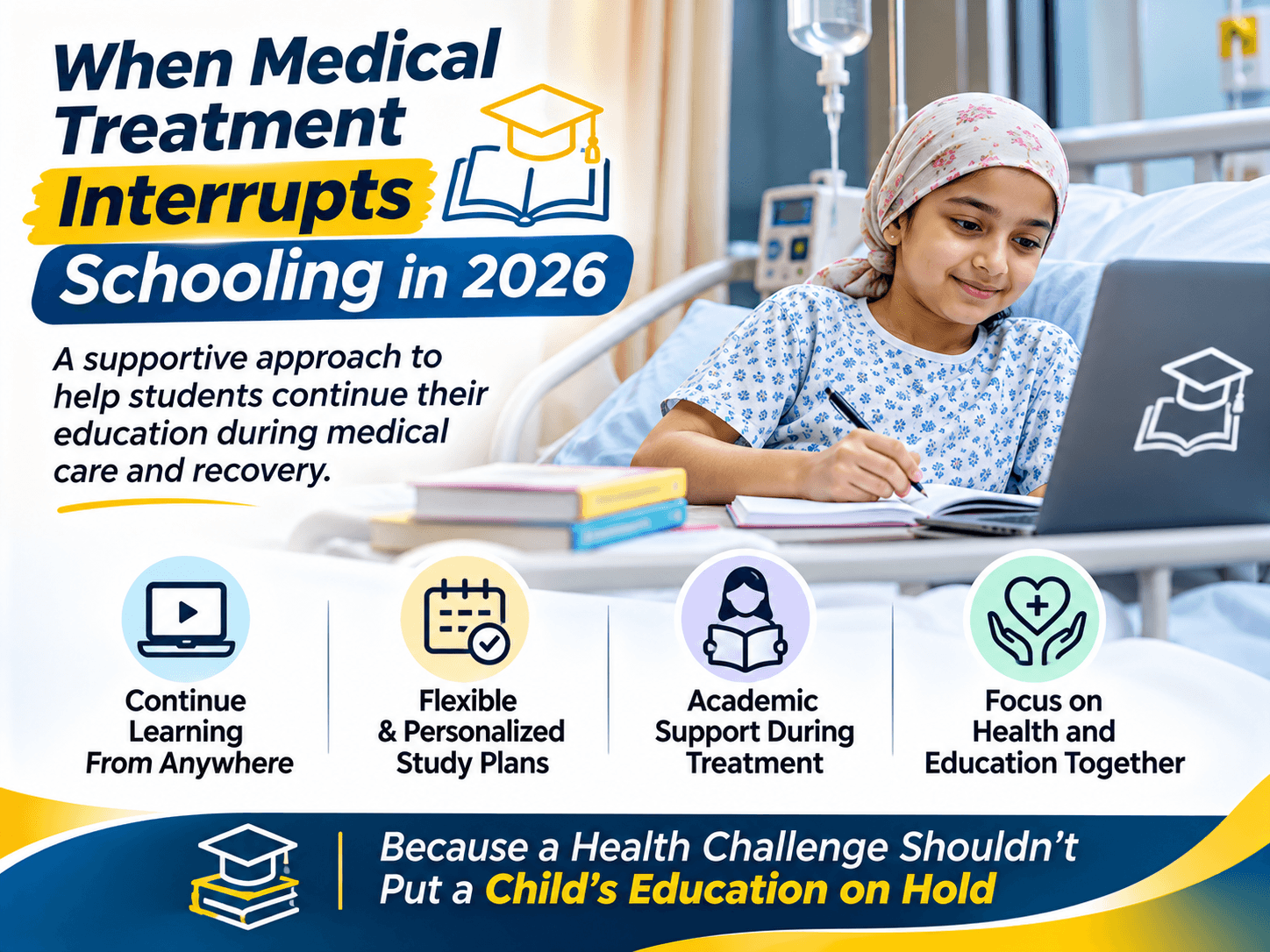
When serious medical treatment interrupts schooling in 2026, families often face an overwhelming dual reality. On one hand, the primary focus must always remain on medical recovery, therapies, and emotional well-being. On the other hand, the relentless pace of traditional academic calendars continues unabated. Parents frequently find themselves juggling hospital visits, doctor consultations, and aggressive treatment schedules while simultaneously trying to manage attendance challenges or alternative learning paths mandated by formal educational institutions.
For many students, prolonged illness or medical intervention is not merely a brief pause in routine; it creates a silent struggle that affects academic momentum, emotional confidence, and family stability. Understanding these challenges is the first step toward finding compassionate and effective educational solutions.
Key Challenges Faced by Families When Medical Treatment Interrupts Schooling
Every family dealing with extended health interventions encounters distinct hurdles depending on the child’s grade level, school policy, and length of treatment. However, several universal challenges emerge during these difficult phases:
- Medical Certificates and Attendance Policies: While traditional schools typically accept medical certificates for short-term illnesses, long-term leaves present significant administrative hurdles. Formal attendance quotas mandated by education boards can put students at risk of being ineligible for end-of-year or board examinations.
- Accumulating Syllabus Gaps and Missed Lessons: Missing weeks or months of classroom teaching leaves compounding gaps in core subjects like Mathematics, Science, and languages. Without targeted academic intervention, catching up with current classwork while covering missed foundational topics becomes extremely daunting.
- Financial Strain of Extra Tuition Costs: Medical treatments inevitably bring substantial financial commitments. When families are forced to hire private home tutors to bridge academic gaps, the combined financial burden of healthcare and specialized instruction places immense stress on household budgets.
- Last-Minute Academic Pressure and Fear of Losing a Year: As exam dates approach, students returning from medical leave often experience severe anxiety. The fear of repeating a grade or losing an entire academic year creates tremendous pressure on both the recovering student and their parents.
The Emotional Toll and the Role of Hospitals and Counsellors
The academic impact is only one dimension when medical treatment interrupts schooling. The psychological effects on young learners are equally critical to address. Children undergoing treatment often feel isolated from their peers, disconnected from daily routines, and anxious about falling behind.
Returning to a conventional school environment after months of absence can spark social anxiety and performance fears. This is where professional school counselling support and close collaboration with hospital paediatric support teams play a vital role. Emotional support helps children process health-related disruptions, rebuild academic self-esteem, and transition back to learning without overwhelming stress.
Looking Ahead: Exploring Flexible Pathways and Alternative Schooling
When long-term medical recovery makes standard daily school attendance impractical, forcing a child into a rigid traditional structure can do more harm than good. Fortunately, modern education offers alternative frameworks designed specifically for flexibility and self-paced progress.
In our upcoming guide, we will explore open board options like the National Institute of Open Schooling (NIOS), which allow students to pause, resume, and customize their study timelines without losing academic credit. Discover how flexible educational pathways can protect your child’s academic future during medical recovery.
Frequently Asked Questions (FAQs)
1. How do traditional schools accommodate students undergoing long-term medical treatment?
Most schools require formal medical documentation and may offer temporary leave approvals. However, because traditional schools operate on fixed schedules, long-term accommodations are often limited, leaving parents to arrange private tuition for missed coursework.
2. What happens if a child misses board examinations due to medical emergencies?
In conventional boards, missing final or board exams usually requires repeating the academic year or appearing for supplementary exams if permitted. Open schooling systems offer flexible examination options, allowing students to sit for exams when they are fully recovered.
3. How can parents prevent academic loss during medical recovery?
Parents can maintain light, flexible self-paced study routines, coordinate with school teachers for essential notes, utilize digital learning resources, and consult educational counsellors to explore non-traditional academic options when necessary.