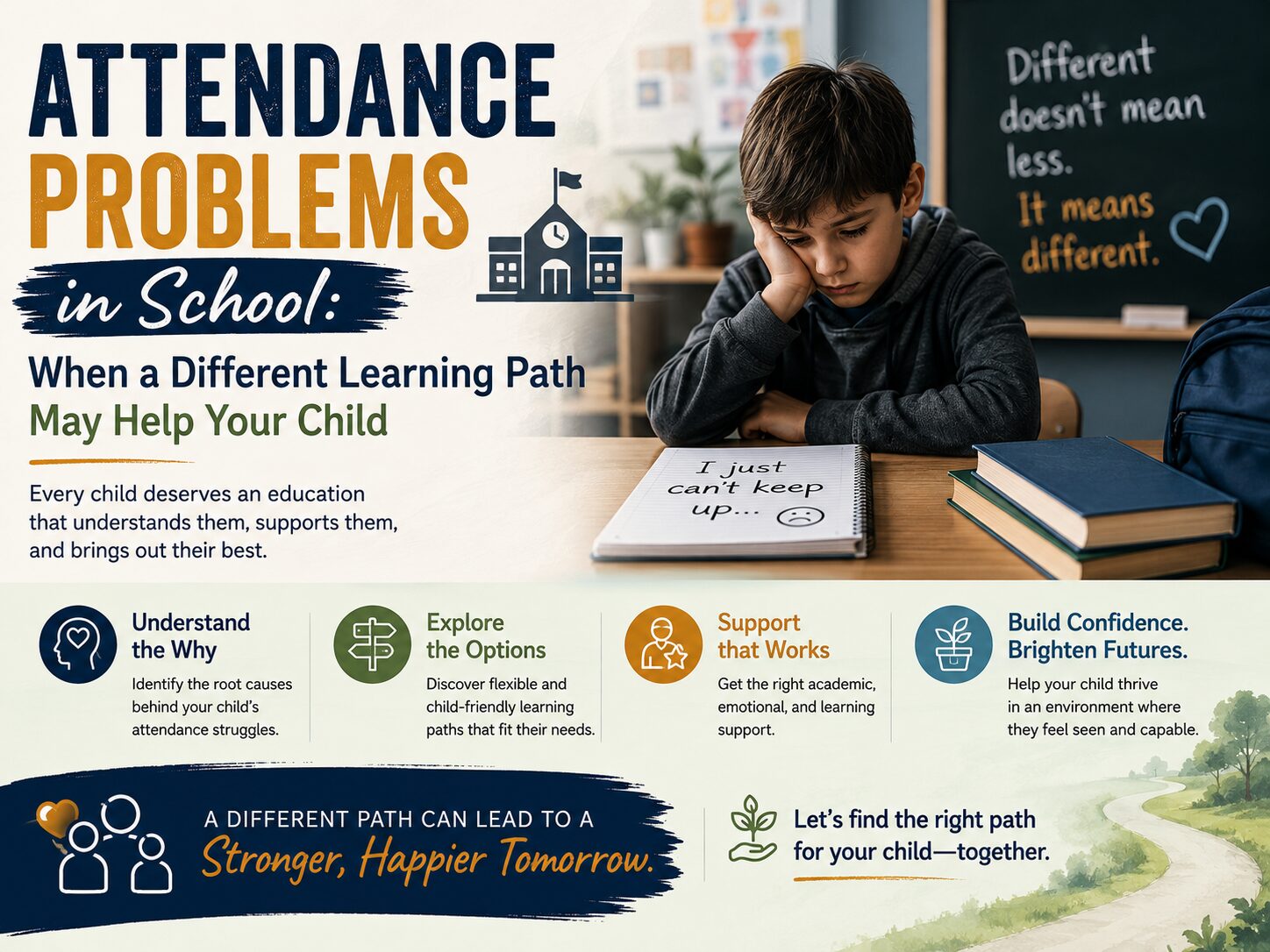
There is a point in the academic year when some parents begin to worry about their child’s attendance. Perhaps the percentage has fallen. Perhaps the child has missed weeks because of circumstances at home. Perhaps academic difficulties have made school increasingly stressful, or the student is seriously involved in sport, music, art, or another activity that demands time and commitment. Or perhaps the child simply does not fit comfortably into the fixed pace and routine of conventional schooling.
When this happens, parents often ask: “What should we do now?” There is no single answer. A child with attendance difficulties does not automatically need to leave regular school — additional academic support or a change in routine may be enough. But in some situations, families begin exploring a recognised alternative pathway such as the National Institute of Open Schooling (NIOS), which offers flexibility in subject choice, pace of learning, and examination opportunities. The important message is simple: an attendance problem does not have to become an education problem.
Why Do Students Develop Attendance Problems?
There is rarely one reason behind poor attendance. Two students with the same attendance percentage can have very different circumstances — academic struggles that erode confidence, a family relocation, sports training that clashes with a fixed timetable, a serious creative interest in music, art or coding, changing family circumstances, or simply difficulty adapting to a rigid routine. Instead of asking only “why is my child absent so often,” it helps to ask: “What is making regular school difficult for my child?” Understanding the reason is the first step toward the right solution.
Attendance Problems Are Not Always About Laziness
A student with poor attendance is easily labelled lazy or uninterested. But attendance alone does not explain the reason behind it. A student who has lost interest in education and a student training seriously in a sport while following an independent study schedule may both show attendance difficulties — their situations are not the same. The better question is: “What support or educational structure does this student need?”
What Is NIOS, and How Is It Flexible?
NIOS is a national open schooling organisation offering Secondary and Senior Secondary education through the Open and Distance Learning model, along with Open Basic Education, Vocational Education, and Life Enrichment Programmes. It provides flexibility in subject choice and pace of learning, uses self-learning materials and personal contact programmes, and offers multiple examination opportunities — including an On-Demand Examination system for eligible learners. Admission is generally valid for five years, subject to applicable rules. NIOS is not simply studying at home without structure — it is a recognised system with its own admission, academic, and examination requirements.
Importantly, flexible does not mean effortless. A NIOS student still needs to study the prescribed syllabus, prepare for exams, follow admission requirements, and build a consistent study routine. Parents should ask whether their child can study independently, needs regular academic support, and whether the chosen subjects align with future goals.
Is NIOS Recognised for Higher Education?
NIOS states that its certificates are recognised and at par with other National and State Boards. Senior Secondary learners can seek admission to universities and professional colleges where they meet the specific eligibility requirements of that institution or course. Recognition does not mean every course has identical requirements — required subjects, minimum marks, and entrance exam eligibility should always be checked before finalising subject choices.
Who May Consider Exploring NIOS?
Families may find it worth exploring for students with persistent attendance difficulties, sports students balancing training and competitions, creative students developing music, art, or design, students who have discontinued regular schooling and want to resume toward Class 10 or 12 certification, students returning after an academic setback, or families facing relocation. NIOS may not suit a student who needs a highly structured classroom, struggles with independent study, or whose future course has specific subject requirements not yet considered. This is why counselling should come before admission — the goal is not to get a student out of regular school, but to find the pathway that helps them keep learning successfully.
SchoolBase and NIOS Academic Guidance
At SchoolBase, conversations with parents often begin with “my child is finding regular school difficult” — but the reason behind that statement varies widely. We work in association with Presidency Public School – NIOS Study Centre, Code 080345, and guide families on NIOS Class 10 admission, NIOS Class 12, subject selection, documentation requirements, and exam preparation. Explore our flexible learning support or review the fee structure before making a decision. SchoolBase does not issue NIOS certificates — certification is issued by NIOS under its own rules.
A Difficult Schooling Experience Does Not Define a Child’s Future
A child with poor attendance should not be labelled lazy. A creative or sports-focused child should not have to choose between developing their abilities and continuing education. For some students, the answer is additional support in their existing school; for others, it may be a different school; and for some eligible learners, NIOS may offer a flexible, recognised pathway forward. Understand the problem, understand the child, understand the qualification, and understand the future goal — then choose the pathway that makes sense.
Frequently Asked Questions
Can attendance problems be a reason to explore NIOS?
Attendance difficulties can be one reason a family explores alternative schooling, but they alone do not automatically make a learner eligible for NIOS or mean it is the best option.
Can a student who has discontinued regular school join NIOS?
Eligible learners who previously studied at Secondary level may be able to seek admission to complete their course or improve performance, subject to applicable rules.
Is NIOS suitable for creative or sports students?
NIOS’s flexibility in subject choice and pace of learning can help students balancing academics with creative or sporting commitments, though suitability depends on individual circumstances.
Does flexible education mean less studying?
No. NIOS requires academic preparation and compliance with its admission, subject, and examination requirements.
Is NIOS recognised for higher education?
Yes, NIOS certificates are recognised and at par with other National and State Boards, though students must still meet each institution’s specific eligibility requirements.
Need Guidance?
SchoolBase – NIOS Academic Guidance & Learning Support
NIOS Study Centre: Presidency Public School – Code 080345, Bengaluru
Website: www.schoolbase.in
Phone: 6361938556
Note: NIOS admission, eligibility, subjects, and examination requirements are governed by applicable NIOS rules and notifications and can change. Parents should verify the latest information with NIOS before making an educational decision.
About the Author
Vinay Kumar, Academic Programme Coordinator, SchoolBase, Bengaluru, works with students and parents exploring NIOS Secondary and Senior Secondary pathways and coordinates academic support and counselling through SchoolBase. Information reviewed: August 2026.