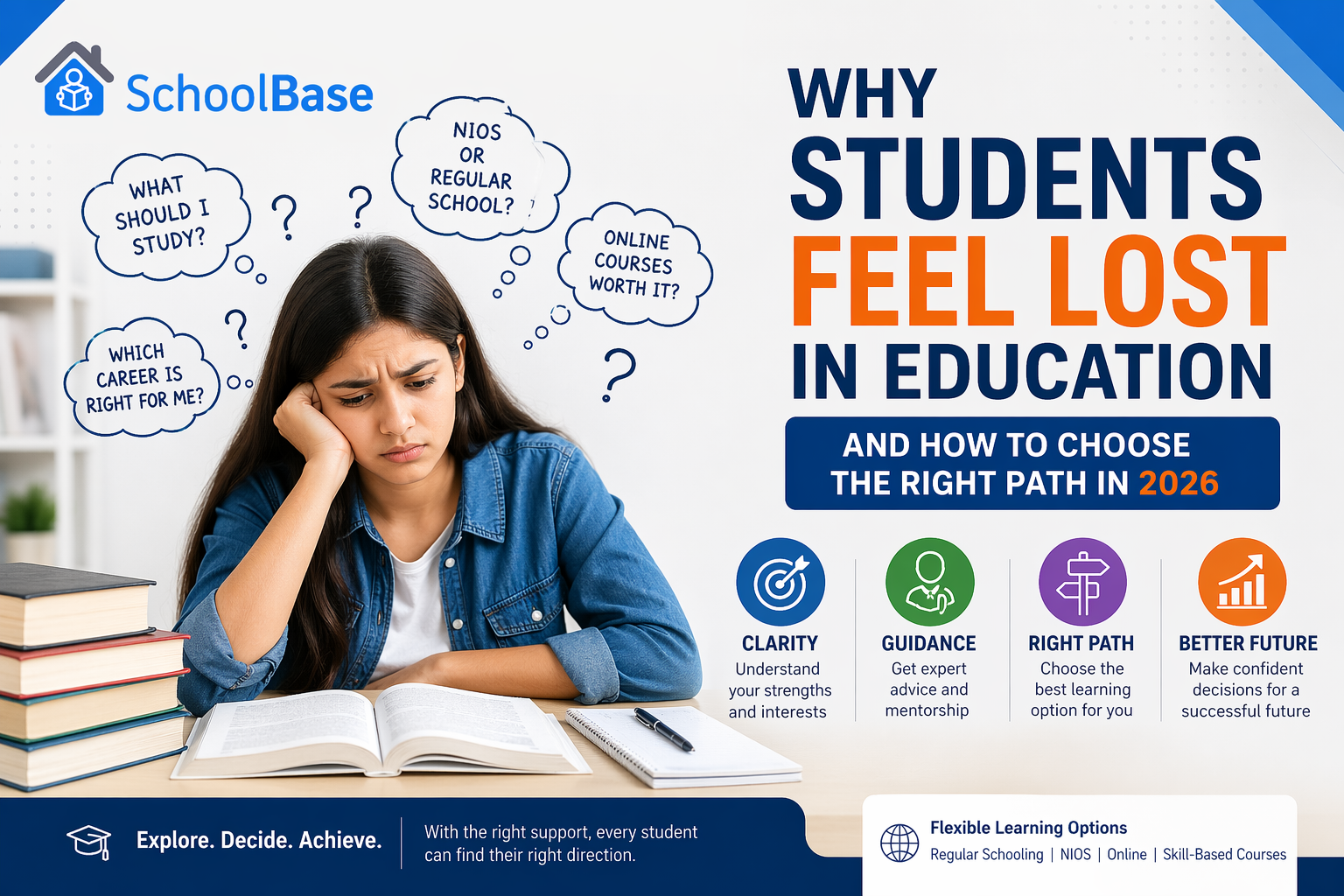
Over the past few years, one concern has become increasingly common among both students and parents: the feeling of being lost in the education system.
Why students feel lost in education is a growing concern among both students and parents today. Despite having access to better resources, multiple learning options, and advanced technology, many students still feel confused about their academic direction. With proper academic guidance, including support through NIOS admission support in Bangalore, students can explore flexible pathways and make informed decisions about their future.
In many cases, students who are unsure about their academic path benefit from structured guidance such as NIOS admission support in Bangalore, where they can understand flexible education pathways and make informed decisions.
The key question is no longer “What should I study?” but “What is the right path for me?”
The Growing Confusion Among Students
Students today are exposed to multiple choices at an early stage. While this seems like an advantage, it often leads to confusion.
Earlier, the academic path was simple and predictable. Today, students must choose between different boards, learning methods, and career options.
This creates uncertainty such as:
- Fear of making the wrong decision
- Pressure to follow peers
- Lack of clarity about future outcomes
Without proper direction, even capable students begin to doubt themselves.
Why the Traditional Education System No Longer Works for Everyone
The traditional education system is built on uniformity. It assumes that all students learn in the same way and perform well under the same conditions.
However, students differ in:
- Learning speed
- Interest levels
- Emotional resilience
When a student struggles in such a system, it is often misunderstood as weakness. In reality, it may simply be a mismatch between the student and the system.
This is why alternative pathways are becoming increasingly relevant.
Addressing Why Students Feel Lost in Education
To effectively address why students feel lost in education, it is important to recognize that the issue is rooted in lack of direction rather than lack of intelligence. Many students struggle because they are unsure about their strengths, learning preferences, and long-term goals.
The traditional education system assumes that all students learn in the same way, but in reality, students differ significantly in their learning speed, interests, and emotional resilience. When a student does not fit into this structure, it often leads to frustration and self-doubt.
The Impact of Too Many Choices
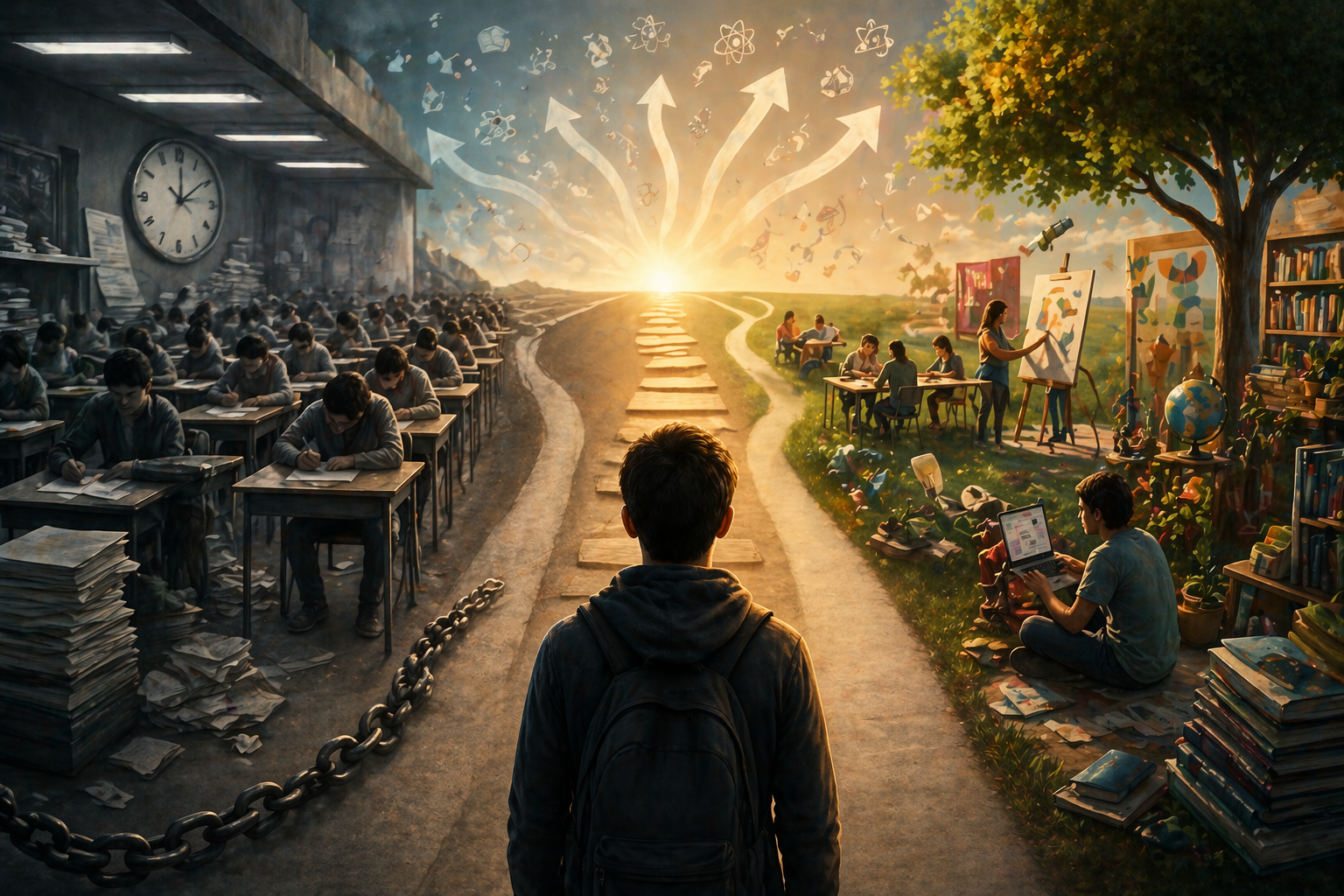
Today’s students face an overwhelming number of options, including:
- Regular schooling
- Open schooling
- Online education
- Skill-based programs
While options are valuable, too many choices without guidance lead to confusion.
Students often:
- Compare themselves with others
- Follow trends instead of suitability
- Delay decisions due to uncertainty
This results in loss of time and confidence.
The Real Problem: Lack of Direction, Not Ability
A critical observation in modern education is that most students are not struggling due to lack of intelligence.
They are struggling because they lack direction.
When students do not understand:
- Their strengths
- Their preferred learning style
- Their long-term goals
They tend to make decisions based on external pressure rather than personal suitability.
Clarity plays a more important role than capability.
Understanding the Student Before Choosing a Path
Before selecting any academic path, it is essential to evaluate the student.
Learning Style
Some students perform better in structured environments, while others thrive with flexibility.
Emotional Readiness
Students recovering from setbacks require supportive systems rather than high-pressure environments.
Academic Foundation
Understanding strengths and weaknesses helps in making better decisions.
Without this evaluation, any decision is incomplete.
Different Education Paths Explained
To make the right decision, students must understand the available options.
Regular Schooling
Suitable for students who:
- Prefer structured learning
- Perform well under fixed schedules
- Are comfortable with academic pressure
Open Schooling (NIOS)
Open schooling provides flexibility and is designed for students who need a different approach.
Students can:
- Choose subjects
- Study at their own pace
- Appear for exams based on preparation
To understand how this system works, students can refer to the NIOS official education system, which explains its structure and recognition.
Skill-Based Learning
This path is suitable for students who prefer practical skills and early career exposure.
Each option has its own advantages. The decision must be based on the student’s needs, not general perception.
How to Choose the Right Path in 2026
Choosing the right academic path requires careful thinking.
Students should consider:
- Their learning style
- Their ability to handle pressure
- Their long-term goals
Parents must focus on understanding the child instead of comparing them with others.
Students who need flexibility and structured support often benefit from open schooling guidance and counselling services, which help them identify the most suitable path.
The Role of Guidance and Mentorship
In today’s complex education system, guidance is essential.
Students require:
- Academic planning
- Continuous monitoring
- Emotional support
Without guidance, even flexible systems can become difficult to manage.
Institutions that provide NIOS coaching and academic support help students stay consistent and focused.
Guidance ensures that students not only choose the right path but also stay committed to it.
Common Mistakes Students Must Avoid
Students often make decisions that lead to confusion and delays.
Following Others
Choosing a path based on peers rarely leads to satisfaction.
Ignoring Personal Strengths
Students must focus on what they are capable of, rather than external expectations.
Delaying Decisions
Indecision leads to loss of valuable time.
Avoiding Guidance
Proper guidance can prevent most mistakes.
A Practical Framework for Decision Making
To simplify decision-making, students can follow a structured approach:
- Understand personal strengths
- Explore available options
- Seek expert guidance
- Make an informed decision
- Stay consistent
This framework helps reduce confusion and builds confidence.
Conclusion
The feeling of being lost in education is not a weakness. It is a reflection of the complexity of modern learning systems.
Students today need clarity, guidance, and structured support to make the right decisions.
Choosing the right path is not about following trends. It is about understanding oneself and selecting a path that aligns with individual strengths.
If students are guided properly, they can overcome confusion and move forward with confidence.
For those seeking clarity, structured support through NIOS education guidance at SchoolBase can help in making informed academic decisions.
Final Thought
Education is not about choosing the most common path. It is about choosing the right path for your future.