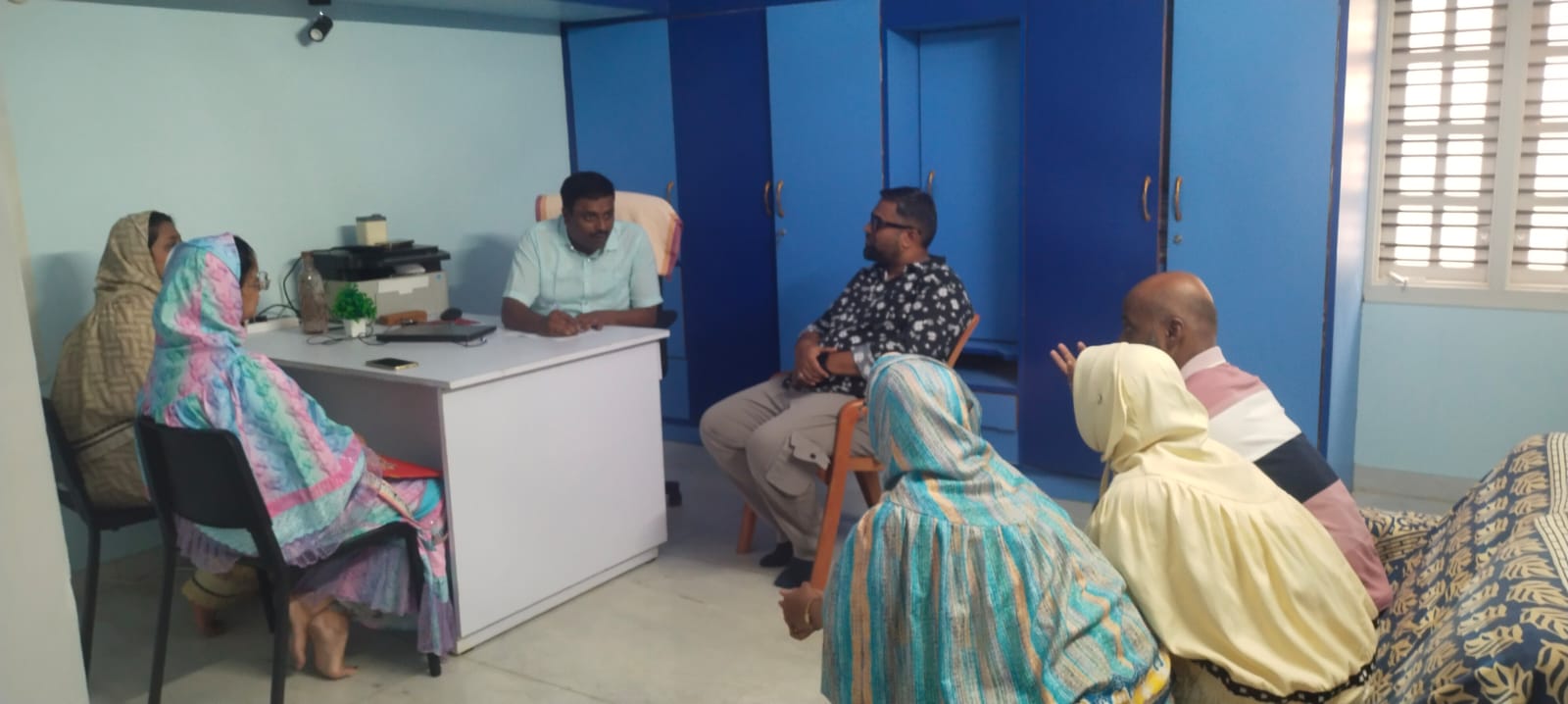
“Many students ask, ‘Can I take a 1-year break from studies without affecting my future?’ At SchoolBase, we believe a well-planned gap year is a turning point, not a setback.”
There is a heavy, often overwhelming silence that fills a home when a child says, “I need a break.” For parents in India’s high-stakes academic environment, that moment is usually followed by a wave of intense anxiety. You start thinking about the future, the societal pressure, the “lost” year, and whether your child will ever find their footing again.
If you are currently navigating the uncertainty of a study gap, it is vital to take a deep breath. You are not alone. In fact, many of the most successful professionals, innovators, and students have used a strategic pause to redefine their path. More importantly, this is not a dead end—it is a transition.
In this exhaustive guide, we will explore why a one-year break from studies can be a strategic turning point, how to avoid common pitfalls, and the exact roadmap to restarting education with more confidence than ever before.
Part 1:The Reality of Choosing to Take a 1-Year Break from Studies
Why It Happens: Beyond the Stigma
In the traditional Indian education system, life is treated like a conveyor belt. 10th Grade leads to 12th Grade, which leads immediately to College. Any pause is seen as “falling behind.” However, the reality for families in Bengaluru and across India is far more nuanced.
A gap year often happens because of:
-
Academic Burnout: The pressure of 8-hour school days followed by 4 hours of coaching can lead to mental exhaustion and “shutdown.”
-
Performance Anxiety: When trial marks don’t meet expectations, a student’s confidence can shatter, making the thought of a final exam paralyzing.
-
The Pursuit of Excellence: High-level athletes, swimmers, and budding pilots often find that a 75% attendance requirement in regular schools is the biggest barrier to their professional training.
-
The “Kota Strategy” Realization: High-achieving students often realize they need to decouple their Board exams from their JEE/NEET/CET coaching to maximize their ranking.
The Emotional Toll: The “Fear Loop”
When a gap occurs, parents often face a cycle of worry:
-
Social Stigma: “What will we tell the neighbors or relatives during the next festival?”
-
Academic Continuity: “Will they be eligible for college later? Will a gap year be a ‘black mark’ on their resume?”
-
The “Void” Anxiety: “If my child stops now, will they ever restart? Will they lose the habit of studying?”
The Truth: A gap year is not a failure. It is a moment to recalibrate. The goal isn’t just to “finish” school; it’s to finish school ready for the world.
Part 2: How to Plan Your Comeback After You -Take a 1-Year Break from Studies
When a student takes a break, families usually react in one of two extreme ways—both of which can be damaging.
Mistake 1: The “Force-Back” Method
Parents, out of fear, force the child back into a high-pressure environment (CBSE or ICSE) that caused the stress in the first place. Without addressing the lack of confidence or the mismatch in learning style, the child often struggles again. This results in a cycle of disappointment that can damage the parent-child relationship for years.
Mistake 2: The “Directionless” Gap
The family decides to do nothing for a year, thinking “rest” is enough. While rest is important, a total lack of structure leads to a drop in cognitive discipline. By the end of the year, the “gap” has turned into a “void,” and the student feels even more disconnected from education.
The Solution: A gap year must be a “Productive Pause.” It needs a direction, a goal, and a flexible system that respects the student’s current mental state while keeping them moving forward.
Part 3: The “Game-Changer” — What is NIOS?
If the traditional system isn’t working, you don’t stop learning—you change the system. This is where the National Institute of Open Schooling (NIOS) becomes the bridge to the future.
The Technical Reality
Many parents don’t realize that returning to private CBSE/ICSE schools after a gap year is technically difficult. These boards have strict age and continuity rules for “regular” candidates. NIOS, however, was designed specifically for flexibility.
What is NIOS?
It is an autonomous organization under the Ministry of Education, Government of India. It is the “gold standard” for open schooling, equivalent to any other national board.
The Benefits of the NIOS Pathway:
-
100% Legal Validity: A certificate from NIOS is equivalent to CBSE/ICSE. It is accepted for JEE, NEET, UPSC, and all global university admissions.
-
Subject Customization: A student doesn’t have to take “the standard set.” If a student struggles with Math but loves Literature and Psychology, they can build a custom curriculum.
-
Credit Accumulation: You don’t have to pass all 5-6 subjects in one week. You can pass two subjects in one month and the rest later.
-
On-Demand Exams: Why wait for March if you are ready in December? NIOS allows students to take exams when they feel prepared.
Part 4: The SchoolBase Support System
While NIOS provides the flexibility, many students struggle without a structured environment. This is where SchoolBase, based in South Bengaluru, transforms the experience.
What We Do Differently
Based near AGS Layout and Arehalli, SchoolBase isn’t just a coaching center; it’s an academic sanctuary. We help students who have faced setbacks to find their rhythm again.
-
Hassle-Free Registration: We handle the complex NIOS documentation for the March 2027 cycle, ensuring you never miss a deadline.
-
The “Teach Twice” Methodology: We understand that a gap year student might have “rusty” concepts. We allow students to attend two full cycles of classes for the price of one. This ensures deep revision and eliminates the fear of the subject.
-
Humanized Counseling: We focus on emotional relief for parents. We remove terms like “slow learner” or “failure” from our vocabulary and replace them with “strategy” and “growth.”
-
Institutional Partnership: In association with Presidency Public School (NIOS Study Centre 080345), we provide the administrative backing and practical training labs that students need to succeed in Science and Technology subjects.
Part 5: Specialized Career Pathways after a Gap
A gap year is often the best time to specialize. Here is how different students use NIOS and SchoolBase to their advantage:
Pathway A: The “Kota Strategy” (NEET/JEE Aspirants)
Toppers often realize that the 6 hours spent in a regular school—dealing with assemblies, non-core subjects, and strict attendance—is time taken away from competitive prep.
-
Strategy: Switch to NIOS for 12th Grade.
-
Benefit: Use 80% of your day for coaching at SchoolBase or specialized centers while completing Board requirements with 20% effort.
Pathway B: The Aviation Route (Pilot Aspirants)
To become a pilot, the DGCA requires 10+2 with Physics and Mathematics. Many students who didn’t take Science in 11th/12th or took a break can use NIOS to specifically clear these two “eligibility subjects.”
-
Strategy: Enroll in NIOS for Physics and Math only.
-
Benefit: Fast-track your pilot training while satisfying legal requirements.
Pathway C: The Professional Athlete
For swimmers, cricketers, or tennis players in Bengaluru, training usually happens in the morning and evening—the exact times regular schools operate.
-
Strategy: Use NIOS for a flexible schedule.
-
Benefit: Train at a professional level without sacrificing your 10th or 12th-grade certificate.
Part 6: Your Month-by-Month Roadmap (March 2027 Cycle)
To avoid the “directionless gap,” you need a timeline. Here is the roadmap we follow at SchoolBase:
-
May – July 2026: The Foundation Phase. Admission and registration. This is the period for “Zero Late Fee” registration (Deadline: July 31st).
-
August – October 2026: The Concept Phase. First cycle of “Teach Twice” classes. Focusing on building basics in subjects the student previously found difficult.
-
November – December 2026: The TMA Phase. Completion of Tutor Marked Assignments (TMA). These internal marks are vital for increasing the final percentage.
-
January – February 2027: The Practical Phase. Conducted at our associated labs at Presidency Public School. Hands-on learning for Science, Data Entry, and Home Science.
-
March – April 2027: The Performance Phase. Final examinations and the successful completion of the “Comeback.”
Part 7: Comparison Table for Quick Decision Making
| Feature | Traditional Board (CBSE/ICSE) | NIOS + SchoolBase Support |
| Attendance | Strict 75% | Flexible (Focus on Mastery) |
| Subjects | Fixed Stream (PCMB/Comm) | Fully Customizable |
| Exam Format | Once a year (All at once) | Subject-wise (Spread out) |
| Ideal For | Continuous learners | Gap years, Athletes, Toppers |
| Coaching | Extra-tuition needed | Integrated “Teach Twice” Support |
| Validity | National / Global | National / Global (Government) |
Part 8: A Compassionate Message for Parents
If you are a parent sitting in your living room in Banashankari or Uttarahalli, feeling like you’ve failed because your child is taking a break—stop.
A child’s value is not defined by their continuity in a rigid system. Some of the most brilliant minds need a different pace. When you support your child’s decision to take a “strategic break” and provide them with a flexible, high-quality alternative like NIOS, you aren’t just saving a year. You are saving their love for learning.
A supported child, given the right environment at a center like SchoolBase, will always outperform a child who is being dragged through a system that doesn’t fit them.
Part 9: Final Checklist – Is This Right for You?
Ask yourself these five questions:
-
Is my child feeling overwhelmed or burnt out by their current school?
-
Do we need to focus on specific competitive exams (JEE/NEET) without school pressure?
-
Are marks in the current board making my child lose confidence?
-
Does my child have a talent (sports/arts) that requires more daytime hours?
-
Do we want a government-recognized certificate that offers more flexibility?
If you answered “Yes” to any of these, the NIOS + SchoolBase pathway is your best solution.
The March 2027 Admission Cycle is Open!
The clock is ticking. The July 31st deadline for registration with zero late fees is the most important date on your calendar. Don’t let another year slip away into confusion or stress.
One correct step today can change everything.
Contact SchoolBase for Expert NIOS Guidance
We are the trusted partners for families across South Bengaluru (Banashankari, Padmanabhanagar, Arehalli, and beyond).
📍 Address: Near Nayara Petrol Bunk, AGS Layout, Ittamadu, Sriramnagar, Bengaluru.
📞 Phone/WhatsApp: +91 6361938556
🌐 Website: schoolbase.in
A gap year doesn’t decide your future. The decision you take after it does. Your comeback starts today.
Part 10: Frequently Asked Questions (FAQs)
1. Will a gap year show up as a ‘red flag’ on my child’s future resume?
In the long run, absolutely not. Employers and universities care about the final result and the skills acquired. Once a student enters a professional degree program or their first job, a one-year gap between 10th and 12th grade becomes a minor footnote. What matters is the quality of the comeback. If your child uses this time to score higher or focus on a passion, it actually demonstrates maturity and strategic thinking.
2. Is NIOS really accepted by top colleges like IIT, DU, or Medical Colleges?
Yes. NIOS is a national board under the Ministry of Education, Govt. of India. Its certificates are legally equivalent to CBSE and ICSE. NIOS students are eligible for all competitive exams, including JEE (Mains & Advanced), NEET, UPSC, and CLAT. Many top-tier universities in Bengaluru and across India have dedicated admission pathways for NIOS students.
3. Can my child switch back to a regular college after completing 10th or 12th via NIOS?
Yes. After completing Class 10 via NIOS, your child is eligible for admission into regular PU Colleges (11th and 12th) in Karnataka. Similarly, after Class 12 via NIOS, they can join regular degree programs in Engineering, Medicine, Commerce, or Arts. The transition is seamless because the board is government-recognized.
4. How does the “Teach Twice” methodology help a student who has had a study gap?
Students returning after a break often have “learning gaps”—they may have forgotten foundational concepts. At SchoolBase, we don’t just rush to finish the syllabus. By teaching the core curriculum twice, we ensure the first cycle builds concept clarity, while the second cycle focuses on exam mastery. This removes the fear of the subject and ensures the student is actually ready for the boards.
5. My child’s school is pressuring us to register as a ‘Private Candidate’—how is NIOS better?
In the State Board or CBSE private track, the student often gets zero internal marks, putting 100% of the pressure on the final theory exam. In NIOS, every student gets Tutor Marked Assignments (TMA), which account for 20% of the total marks. This “safety net” ensures that your child isn’t penalized for having a bad exam day.
6. We live in Banashankari; do we need to visit the NIOS head office for registration?
No. As a dedicated support center in South Bengaluru, SchoolBase handles the entire administrative process for you. From initial registration and subject selection to managing TMA submissions and hall tickets, we ensure a hassle-free experience so you can focus entirely on your child’s academic progress.
7. What are the ‘High-Scoring’ subjects available in NIOS?
One of the best ways to rebuild confidence is to choose subjects where scoring is easier. We often recommend:
-
Data Entry Operations: High practical weightage.
-
Home Science: Engaging and practical-based.
-
Painting: Great for creative students to boost their total percentage.
-
Business Studies: A manageable alternative to heavy Science theory.
8. What is the deadline for the March 2027 cycle?
The most critical date is July 31st, 2026. This is the last date for registration with zero late fees. Registering early also gives your child the maximum benefit of the “Teach Twice” methodology, as they can start their first learning cycle immediately.